Review: Halloween Cat Vector for Embroidery Projects
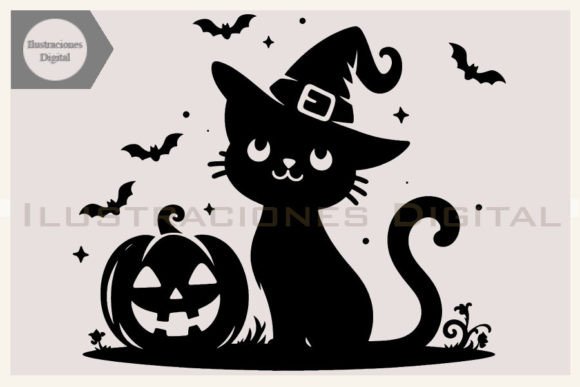
As a designer who spends more time staring at stitch simulations than I care to admit, I have learned that not every cute graphic translates well to thread. When I first pulled the Halloween Cat Vector, SVG, PNG Clipart into my workspace, my initial reaction was one of cautious optimism. The silhouette is clean, and the theme is undeniably popular for the autumn season. But for those of us running a craft business or creating personalized gifts, aesthetic appeal is only half the battle. The real question is always: how does this actually stitch out?
I approached this evaluation with the mindset of a small shop owner preparing for the October rush. I wasn’t just looking at a digital file; I was visualizing it on a customer’s custom apparel, a boutique tote bag, and perhaps a cozy baby item. Here is my practical breakdown of how this design performs in real-world embroidery scenarios.
First Impressions and Visual Personality
The mood of this design is playful yet classic. It avoids the overly grotesque elements sometimes associated with Halloween, making it versatile for a wider audience, including children and those who prefer whimsical decor over scary motifs. The lines are crisp, which is a promising sign for digitizing. In the world of Graphics and Crafts, clean vectors are the foundation of a good machine embroidery design because they allow for precise pathing.
When I imagine this stitched out, I see potential for strong visual impact. The shape suggests a balance between open space and defined edges. For an embroidery project, this means we can likely rely on a combination of satin stitch for the outlines and fill stitch for any solid areas, provided the details aren’t too microscopic. The visual personality feels approachable, which is crucial if you are an Etsy seller trying to appeal to families looking for holiday embroidery.
Real-World Application: From Sweatshirts to Patches
To truly test the viability of the Halloween Cat Vector, SVG, PNG Clipart, I mentally placed it on several common substrates. Let’s talk about custom apparel first. On a black sweatshirt, this design could pop beautifully if stitched in orange, purple, or even a metallic gold thread. The contrast would be high, ensuring the design is readable from a distance. This makes it an excellent candidate for bulk orders for school events or family matching outfits.
However, moving to smaller items like caps or embroidered patches requires more scrutiny. A cap has a curved surface, which can distort designs if they are too wide or dense. If this vector scales down well without losing its characteristic "cat" shape, it could work as a chest logo on a dad hat. For patches, the rigid backing helps maintain shape, allowing for higher stitch density without puckering. I could easily see this as a best-selling small shop product during the fall craft fair circuit.
For home decor, such as a pillow cover or kitchen towel, the design needs to hold up to washing. A tote bag design using this clipart would need robust stabilizer support, especially if the bag is made of canvas or heavy cotton. The handmade product value increases when the stitching looks intentional and clean, rather than messy or pulled.
Navigating Fabric Textures and Hoop Constraints
One of the biggest challenges in commercial embroidery is fabric texture. If you are planning to use this on a fuzzy fleece blanket or a textured waffle knit, you must consider how the threads will sink into the pile. The Halloween Cat Vector, SVG, PNG Clipart relies on clear shapes. On high-pile fabrics, fine details might get lost. In such cases, I recommend using a topping stabilizer to keep the stitches on the surface of the fabric texture.
Hoop size is another critical factor. Before you commit to a large run, check the maximum dimensions of your machine. While the SVG format allows you to scale the image infinitely for cutting machines, embroidery files have physical limits based on your hoop. If you are working with a 4x4 inch hoop, you may need to simplify the design or ensure the scaled-down version remains legible. Tiny lettering or intricate whiskers can become a nightmare of thread breaks if scaled down too far on stretchy fabric.
Dark fabric presents its own set of challenges. If you are stitching a light-colored cat on a navy shirt, you might need an underlay of white thread to prevent the shirt color from showing through. This adds time and thread cost, which affects your pricing strategy as a creative entrepreneur. Always test your thread colors against the fabric background before finalizing your digital embroidery file settings.
Commercial Viability and Brand Consistency
For digital product sellers and apparel decorators, consistency is key. Does this design fit your brand? If your shop specializes in whimsical, hand-drawn styles, this vector might need some artistic tweaking to match your aesthetic. However, if your brand leans toward clean, modern, and scalable designs, this asset fits perfectly. It enhances buyer engagement because it is recognizable and timely.
Using this in a printable mockup can help you gauge customer interest before you stitch a single thread. Create a few variations—maybe one with a witch’s hat, one with a pumpkin—and see which resonates more on your social media. This data-driven approach minimizes waste and maximizes the potential of your design assets.
Practical Designer Notes for Best Results
Before you launch this into production, here are my top recommendations for ensuring a professional finished product:
- Test on Scrap Fabric: Never skip this step. Stitch the design on the same type of fabric you plan to use for the final product. Check for puckering, thread breaks, and registration issues.
- Check Stitch Density: If you are digitizing this yourself from the vector, ensure the stitch density is appropriate for the fabric. Too dense, and it will stiffen the garment; too sparse, and the fabric will show through.
- Stabilizer Selection: Use a cut-away stabilizer for stretchy fabrics like t-shirts and sweatshirts to provide long-term stability. For woven fabrics like tote bags, a tear-away might suffice, but a mesh top stabilizer can help with clarity.
- Verify Licensing: The product description mentions vector cut files in .svg and .eps. Ensure you understand the licensing terms for commercial use. Just because you can cut it doesn’t always mean you can sell the stitched item without checking the specific license attached to the graphics.
- Contrast Checks: Test the design in black and white mockups. If it loses its definition in grayscale, it might lack the necessary contrast for quick visual recognition on a crowded craft fair table.
In conclusion, the Halloween Cat Vector, SVG, PNG Clipart offers a solid foundation for autumn-themed projects. It is versatile enough for baby embroidery, bold enough for adult apparel, and charming enough for home decor. By paying attention to fabric choice, stabilizer use, and proper scaling, you can transform this digital asset into a high-value handmade product that customers will love. Whether you are an experienced designer or a hobbyist just starting out, treating this file with technical respect will yield the best results for your craft business.