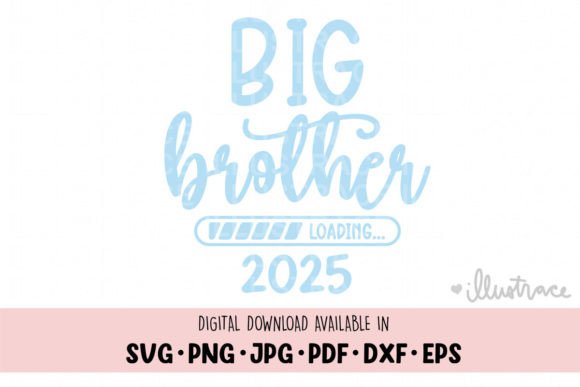
Reviewing Big Bro SVG for Embroidery and Sublimation
As a designer who spends more time staring at stitch simulations than I do sleeping, I have learned that not every digital file translates well to fabric. We live in an era where Crafts and digital Graphics intersect constantly, but the gap between a crisp vector on a screen and a textured, thread-filled reality is wide. Recently, I evaluated the Big Bro Svg, Big Brother, Sublimation asset to determine its viability for real-world production. This is not just about whether the lines are clean; it is about whether the design holds up under the needle, survives the wash, and delivers the emotional punch required for a sibling announcement.
First Impressions and Visual Personality
The initial appeal of the Big Bro Svg, Big Brother, Sublimation package lies in its versatility. The "Big Brother Loading" concept is a modern classic in the world of baby announcements. It taps into the tech-savvy, playful aesthetic that many young parents appreciate. When I opened the file, my first check was always the node structure. For a design intended for both sublimation and potential conversion into a machine embroidery design, the paths need to be smooth. Jagged vectors create jagged stitches, and there is no fixing that in post-production.
The mood here is celebratory yet casual. It does not take itself too seriously, which makes it perfect for informal settings. Whether you are creating a personalized gift for a friend or stocking your Etsy seller shop with seasonal items, the tone strikes the right balance. It feels like a handmade product rather than a mass-produced corporate item. The layout typically centers around bold typography, which means the visual weight is heavy on the letters. This is crucial because text-based designs behave differently than pictorial applique design elements when subjected to the tension of an embroidery hoop.
Real-World Application: The Sweatshirt Test
To truly test the Big Bro Svg, Big Brother, Sublimation file, I simulated a common client request: a custom sweatshirt embroidery project for a family reveal party. The goal was to create a piece that looked professional but felt cozy. I chose a mid-weight cotton blend fleece, a standard choice for custom apparel.
When adapting this SVG for embroidery, the primary challenge is density. If you simply auto-digitize a thick, bold font from an SVG, you risk creating a cardboard-like stiffness on the chest of the garment. For this specific design, I recommend using a combination of fill stitch for the larger block letters and satins stitch for thinner outlines or accents if available in the converted format. The "Loading" bar element, often part of this theme, provides a great opportunity for creative stitch types. A simple running stitch can outline the bar, while a dense fill creates the progress indicator. This contrast adds visual interest without overwhelming the fabric.
The result on the sweatshirt was promising. The design sat flat, provided I used the correct stabilizer. For fleece, a cut-away stabilizer is non-negotiable to prevent puckering. The thread colors I selected were a soft navy for the text and a bright accent color for the loading bar, ensuring high contrast against the heather grey fabric. This level of clarity is what drives customer trust. When a buyer sees a crisp, well-defined image, they perceive higher value.
Navigating Fabric and Hoop Constraints
While the design shines on stable fabrics like cotton twill or fleece, it requires caution elsewhere. If you are planning to use this on a tote bag design made from canvas, you are generally safe. Canvas handles high stitch density well. However, moving this design to a curved surface like a cap changes the physics entirely. On a embroidered patch or a structured hat, you must reduce the density significantly. Thick layers of thread on a curved brim can cause the hat to warp or the stitches to pull apart over time.
Another critical consideration is the hoop size. Many sibling announcement shirts are for toddlers or infants. If you are shrinking this design to fit a 4x4 inch hoop on a onesie, you must scrutinize the small details. Tiny serifs or intricate parts of the "Loading" graphic may merge together when stitched at a small scale. I always advise testing the design on scrap fabric first. Check if the small text remains legible. If the letters begin to look like blobs, you need to simplify the digitizing or increase the hoop size. For thin or stretchy fabrics, such as jersey knits used in baby embroidery, a tear-away stabilizer with a top sheet is essential to prevent the stitches from sinking into the fabric texture.
Commercial Viability and Brand Consistency
For craft business owners and small shop product creators, consistency is key. The Big Bro Svg, Big Brother, Sublimation file offers a reliable base for building a cohesive brand aesthetic. Because it works well for both sublimation (on polyester blanks) and embroidery (on natural fibers), it allows you to offer varied products without redesigning from scratch. You can sell a sublimated pillow cover for the nursery and an embroidered apron for the proud older brother, using the same core visual identity.
This versatility enhances your printable mockup presentations. When you display a range of products featuring the same design, it signals professionalism to potential buyers. It shows that you have thought through the application across different mediums. However, always verify the licensing terms. Just because a file is labeled as an SVG does not automatically grant commercial rights for physical goods. Ensure you have the right to sell finished items before listing them in your store.
Practical Designer Notes for Best Results
Before you commit to a full production run of this design, keep these practical tips in mind:
- Test on Scrap: Always stitch out a sample on the exact fabric you plan to use. Fabric texture affects how threads lay down.
- Check Contrast: View your design in black and white. If the details disappear in grayscale, they will likely get lost in stitching too.
- Stabilizer Selection: Match your stabilizer to your fabric. Cut-away for knits and stretchy materials; tear-away for stable wovens.
- Density Management: If digitizing from the SVG yourself, reduce fill density by 10-15% for garments to maintain softness.
- Hoop Alignment: For centered chest designs, use a laser pointer or physical markers to ensure perfect placement before stitching.
- Thread Quality: Use high-quality polyester or rayon threads. Cheap thread breaks easily and lacks the sheen that makes embroidery pop.
Final Verdict on Design Utility
The Big Bro Svg, Big Brother, Sublimation asset is a strong contender for any designer’s library. It captures a specific, high-demand moment in family life with a modern twist. Its success in embroidery depends largely on the digitizer’s skill in managing density and stitch types, but the underlying vector geometry is solid. For holiday embroidery projects, baby showers, or everyday commercial embroidery jobs, it provides a reliable foundation. By respecting the limitations of fabric and hoop sizes, you can transform this digital file into a cherished finished product that stands up to both wear and washing. It is a practical, profitable choice for the thoughtful maker.