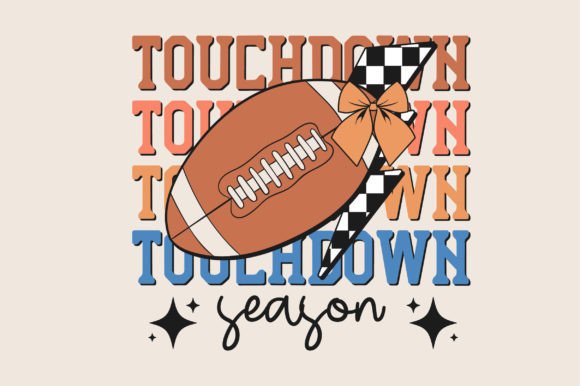
American Football Retro SVG Sublimation Review
When I first pulled up the American Football Retro SVG Sublimation file on my screen, I wasn’t just looking at a graphic; I was visualizing how those vector paths would translate into thread. As an embroidery designer who spends half my life tweaking digitized files and the other half managing client expectations, I approach every new asset with a critical eye. This isn’t just about whether the image looks good on a monitor. It is about whether it holds up under the needle, survives the wash cycle, and ultimately sells the finished product.
The retro aesthetic is having a massive moment in the Crafts and apparel world right now. Nostalgia sells, but only if the execution feels authentic and high-quality. This design promises a vintage sports vibe, which is perfect for the current market trend of collegiate-style merchandise. But does it work for embroidery? Let’s break down the practical realities of using this asset in a real-world shop environment.
First Impressions and Visual Personality
The immediate mood of the American Football Retro SVG Sublimation is playful yet structured. The shapes are bold, which is generally a good sign for stitchers. In embroidery, overly intricate details often get lost or turn into a messy bird’s nest of thread. The fact that this design is built from 100 vector shapes suggests a level of modularity. For a designer, this is gold. It means I can isolate specific elements—perhaps just the football icon or a specific typographic element—to create simpler, smaller designs for items like baby caps or pocket patches.
The layout feels balanced, avoiding the common pitfall of asymmetrical weight that can cause hoop burn or fabric distortion. When I imagine this stitched out, I see clean lines and distinct color blocks. The retro theme relies heavily on contrast, so the separation between elements is crucial. If the lines are too close together, you risk thread crowding, where one color bleeds visually into another. From a preliminary look, the spacing appears sufficient for standard satin stitches and fill stitches, provided the digitizer respects the original vector boundaries.
Real-World Application: The Custom Sweatshirt Test
To truly evaluate a design, you have to imagine it on a product. Let’s say a client comes to my small shop wanting a custom gift for their partner who is obsessed with Sunday league football. They want a sweatshirt embroidery piece that looks vintage, not like a modern corporate logo. This is where American Football Retro SVG Sublimation shines.
I would likely place this design on the left chest or as a larger back print on a heavyweight cotton fleece. The bold nature of the retro graphics stands up well against the texture of fleece. However, because this is originally a sublimation-focused SVG, I need to be mindful of how I convert these shapes into stitches. Sublimation allows for infinite color gradients and soft edges, whereas embroidery is binary: thread is there, or it isn’t. I would simplify any subtle shading into solid blocks of color. This ensures the stitch density remains manageable and the production time stays profitable.
For an Etsy seller or boutique owner, this versatility is key. You aren’t just selling a shirt; you are selling a vibe. The retro feel taps into a sense of community and tradition, making it an excellent choice for team gifts, family reunion apparel, or even holiday embroidery projects for sports-loving families.
Navigating Fabric and Hoop Constraints
While the design is strong, it is not without its challenges. Not every surface is created equal. If you are planning to use this on a tote bag design made of canvas, you are in safe territory. Canvas handles higher stitch counts well. However, if you attempt this on a thin, stretchy jersey for a baby embroidery onesie, you need to proceed with caution.
The "retro" style often involves thick outlines. On stretchy fabric, these dense areas can cause puckering if not properly stabilized. I always recommend using a cut-away stabilizer for knit fabrics to maintain the integrity of the finished product. Additionally, check your hoop size. If the full design is large, you might need a 5x7 or 6x10 hoop. Trying to cram a large, detailed retro graphic into a 4x4 hoop will result in loss of detail and potential machine errors.
Another consideration is dark fabric. Retro designs often use muted or pastel palettes. If you are stitching this on a black hoodie, you must ensure your thread colors have enough contrast. A navy blue football on a black shirt will disappear. In these cases, consider adding a white underlay or choosing brighter thread colors to make the design pop. This is a simple adjustment, but it makes the difference between a professional-looking item and an amateur mistake.
Commercial Viability and Brand Consistency
For those running a craft business, consistency is everything. Using high-quality design assets like this helps build a recognizable brand style. The American Football Retro SVG Sublimation fits neatly into the "modern vintage" category that is currently dominating social media trends. By offering this on various products—embroidered patches, aprons, pillow covers—you create a cohesive collection.
However, before you list these items, you must verify the licensing. The product description mentions AI, EPS, SVG, and PNG files. While SVGs are great for cutting machines and sublimation, they are not native embroidery files. You will need to digitize this design or convert it using software like Wilcom or Hatch. Ensure that the license allows for commercial use of the derived embroidery file. Many designers assume that buying an SVG grants them the right to sell stitched items, but this is not always the case. Always read the fine print to protect your small shop product line.
Practical Designer Notes for Best Results
Before you commit to a full production run, follow these steps to ensure quality:
- Test on Scrap Fabric: Never stitch directly on the final garment. Use a similar fabric scrap to test tension and density.
- Check Thread Contrast: Lay out your physical threads against the fabric. Digital screens lie; physical thread does not.
- Review Stitch Density: If you are digitizing this yourself, keep the density moderate. Retro designs look best with slightly textured fills, not solid plastic-like coverage.
- Inspect Small Details: Zoom in on the vector file. Are there tiny anchor points that will result in unnecessary jumps or trims? Clean up the path before digitizing.
- Mockup in Black and White: Remove color to check the silhouette. If the design doesn’t read clearly in grayscale, it won’t read clearly from a distance.
In conclusion, the American Football Retro SVG Sublimation is a promising asset for the right project. It offers the nostalgic appeal that customers crave, with a structural simplicity that translates well to thread. Whether you are creating a personalized gift for a friend or expanding your commercial embroidery catalog, this design has potential. Just remember that the file is the starting point, not the finish line. Your skill in digitizing, stabilizing, and stitching is what will ultimately determine the success of the project. Treat it with the respect it deserves, and it will serve your business well.